Showing posts with label Bin Laden. Show all posts

Monday, 31 August 2015

Better Than Them

Nazis on trial, Nuremburg 1946     
We are used to the media twisting stories, but few stories are more emotive than Osama Bin Laden and the 9/11 attacks in the USA. So when issues around them are twisted and misrepresented, the result can be the makings of yet a further tragedy - the sacrifice of truth.

Labour leadership candidate Jeremy Corbyn is being excoriated by the Tory press, the leader of what is left of the Lib Dems and by his own party's defence spokesperson for saying in 2011 that :
"There was no attempt whatsoever that I can see to arrest (Osama Bin Laden), to put him on trial, to go through that process. This was an assassination attempt, and is yet another tragedy, upon a tragedy, upon a tragedy. The World Trade Centre was a tragedy, the attack on Afghanistan was a tragedy, the war in Iraq was a tragedy. Tens of thousands of people have died."

Lib Dem Tim Farron attacked these comments as "utterly wrong", apparently unaware that his predecessor Paddy Ashdown had in fact uttered very similar sentiments at the same time as Corbyn, saying that Bin Laden's killing rather than trial under the due process of the law was "wholly, wholly, wholly wrong".

Undeterred, Labour's Kevan Jones chimed in that Corbyn's comments showed he was out of touch with ordinary people. Yet, what is it that appals us most about al-Qaeda and ISIS and their ilk? Is at least one aspect of it not their arbitrary killings of people without any due process of law?

Labour leader contender Jeremy Corbyn
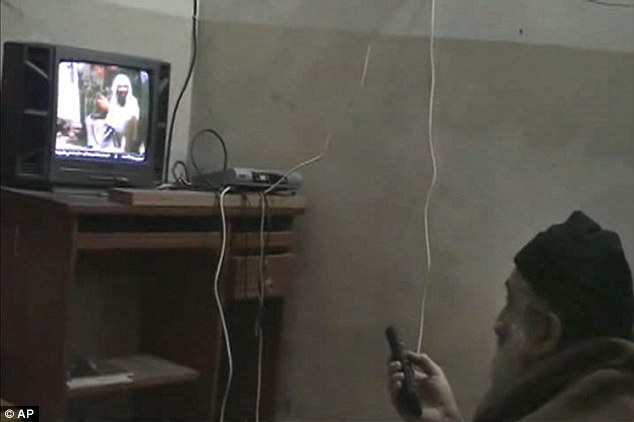
We will probably never know for sure what happened when Bin Laden was shot dead by US commandos when they burst into his bedroom. It may or may not have been possible to arrest him. But why would we not regret the absence of a trial?

After all, aren't some of the most famous trials in history the ones that took place at Nuremburg in 1946, when the surviving Nazi leaders of Germany were put on trial to account for their many crimes. It was a showcase for both the appalling acts they had committed and for the fact that, what defined democratic countries over brutal thugs like Hitler's henchmen and, by extension, Bin Laden's gang, was and should be the rule of law and the judicial process of fair trial.

Corbyn has made clear he totally opposes all that al-Qaeda stands for; none of the words he has spoken indicate any sympathy or support for Bin Laden and his terrible deeds. What they do warn is that, if we spiral down rather than hold ourselves to the highest ethical standards, we risk prolonging the agony of conflict and we also perversely allow al-Qaeda to win no matter how many times we kill Bin Laden. That is because what al-Qaeda and ISIS want more than anything is for us to stop being ourselves, stop having free countries ruled by fair laws passed by democratic legislatures and enforced by properly functioning courts using due process.

The trial of Osama Bin Laden would have laid bare his crimes, his poisonous worldview and might have put a crashing halt to the radicalisation of some of those who regard him as a hero. Doubtless, it might have raised some difficult questions too about his past affiliations and the Bush family's relationship with his own relatives; but in the struggle to oppose the Islamists advancing through Syria and Iraq, what could possibly have been a more powerful way of showing that we were better than them?

Friday, 24 August 2012

Breivik - Totally Sane and a Complete Bastard

And so the verdict is in: by a unanimous decision of five judges, a Norwegian Court in Oslo has found Anders Breivik, the xenophobic terrorist who butchered 77 people last year, to be completely sane. He has been sentenced to a minimum of 21 years in prison - the maximum under Norwegian law - which can be extended in 5 year tranches if he is considered to remain a threat to society.

Ironically, the prosecution was keen to find him insane and apparently even now may conceivably appeal on this point.

However, this seems to typify the reaction so common when a white man slaughters people in the name of a political creed - in Breivik's case, white supremacy and Nordic racism. Within hours of his murder of scores of young socialists on the island of Utoya, the media and others were declaring him sick, mad, the product of a broken family, a loner obsessed with violent video games, and so on.

Strikingly, the media often does this with rightwing white terrorists - in spite of their normal revulsion of excuses for criminal activities, they all too frequently hurry to explain their excesses as mental aberrations and write them a get out of jail free pass. We don't hear the same excuses about other terrorists - they don't write about Osama being ignored by his Mum, or the 9/11 bombers being gripped by paranoid delusions: their activities are correctly ascribed to their ideology; so why not Breivik's and the likes of Timothy McVeigh as well?

Everything would have been different if only Osama's parents
had let him watch "The Prisoner"
Yet in truth, Breivik and his muderous activities, while maybe superficially inexplicable to the many ordinary citizens who would never contemplate such extreme acts whatever their views, are not so inexplicable at all. They are simply the tip of a very dangerous iceberg of hatred which we ignore at our peril. Look at the messages of support he got from rightwingers across Europe on web boards; or the excusatory comments to be found written by Daily Mail readers under the articles about him of the "it's terrible but not surprising.." variety. Breivik is responsible for his own actions, but the slaughter of Utoya, by his own admission, was in part inspired by the commentaries published by journalists like the odious Melanie Philips. His manifesto took their extreme views and moved them on a few stages to what was, for him, a perfectly logical conclusion.

Supremacist ideologies lend themselves to violence - we have seen that time and again, from the anti-Semitism of the Nazis to the "ethnic cleansing" by the Serbs in Bosnia, or the current spate of murderous assaults on Christians by Boko Haram in Nigeria. Breivik and his acolytes may spend most of their time in their bedrooms online, devising fantastical pseudo-organisations with kitsch medieval names and symbols, but that does not make them mad, nor any less dangerous.

Utoya, Srebrenica, Zaria, Kaduna - cultural supremacists of different nationalities and faiths continue the slaughter of the innocent, use violence in place of argument and twist sometimes genuine grievances into weapons of scapegoating and hatred. Their acts betray their own deep insecurities about themselves and degrade the very cultures they claim to defend or promote, but that does not give any credence to writing them off as aberrations, excusing their wider societies of their own (and our own) failures to be inclusive and humane with each other and with strangers.

It may offend those of us with inherent liberal beliefs in the fundamental goodness of humans, but for whatever reasons, the people who would bomb and kill others in the name of culture are usually far from insane, no matter how unpalatable their beliefs. In so many ways, they are simply the extreme manifestation of their own societies, of the savagery that lurks beneath the thin veneer of civilisation which can so easily be stripped away - just look at how quickly ordinary people were committing the most gross acts against their neighbours in former Yugoslavia, or in Rwanda, or Chechnya, or scores of other places at many times in history.

So they are not mad and indeed the act of declaring their actions necessarily insane both reinforces totally inappropriate stereotypes about mental health and completely misses the real causes of the atrocities they commit. In the film Downfall, Adolf Hitler was powerfully portrayed as a dark-minded, manipulative and angry human being -  causing great offence to many, not because it was in any way inaccurate, but because by showing how banal and even normal evil can be, it conveyed the very uncomfortable truth that such terrible acts can be carried out by someone who is ultimately just flesh and blood, like any of us.

And so the people who blow up cars in streets or detonate bombs on underground trains or shoot defenceless teenagers in the name of defending culture or religion are not insane at all - but they are very, very bad. And rather than writing them off as not responsible for their actions and in the process exculpating ourselves, we must certainly resist them with every breath we can find. But to begin with, we need to take a very, very long look at ourselves and our societies and how they can so easily provide the fertile ground for the poisonous seeds like Breivik to bud and bloom so very, very tragically.

Tuesday, 10 August 2010

"People of the Book" - a review of Zachary Karabell's history of Islam and the West


It is always a treat to read something that is tightly written, fresh, and a bit different. This relatively short book (291 pages) is just that - American writer Zachary Karabell captures a broad sweep of history with an exciting gusto that brings periods and places normally obscure to western historians alive and with an immediacy that is explained by his central premise - that Judaism, Christianity and Islam have existed far more in mutual tolerance and respect, and sometimes even harmony, with each other than they have in conflict - whether the conflict of the Crusades or of the contemporary jihadists and neocons.

He takes us through the founding of Islam right up to the 1980s Middle east, yet somehow you do not get the sense of any period being overlooked or short-changed. Whether scholars, soldiers, merchants, priests or philosophers, he brings different ages to life by focusing on individuals of note at various points, though also slips down to take in anecdotes of every day life - how Moses Maimonides, a Jew, felt about working as a doctor at the court of Saladin, the Muslim prince, during the day to go home at night and work on his great treatise of rational Judaism; or how the Muslim caliph, Harun al-Rashid, turned Bagdhad into a centre of multi-faith discourse and learning, where his son held debates with Christian scholars; or how, more recently, men like Abduh argued for a new interpretation of Islam to mirror the Enlightenment process in Europe.

Yet there are dark tales here too - the slaughter of Muslims, Jews and heretic Christians by the Crusaders at the fall of Jerusalem in 1099. The suppression of much of the learning of Islamic centres such as Cordoba and Bagdhad by a more conservative strain of thinking around 700 years ago, one which has persisted in some respects and some societies ever since. And more recently the expulsion of the Palestinians and the creation of an essentially religious based state in Israel in 1948 and subsequently, flying full in the face of history while simultaneoulsy recasting history to justify the present.

Karabell's premise is that, as the third of the three faiths to emerge, Islam has always had to define itself in relation to Christians and Jews, acknowledging them all to have a shared history and a shared God, yet viewing both as incomplete. Mohammed invoked special protection over both Jews and Christians and this is central to the not always easy tolerance shown to both these faiths through history by often politically and militarily superior Muslims.

Contrary to the popular myths in the West of bloodthirsty Arabs forcing Islam on cowed conquered peoples, the book shows how in truth many eastern Christians welcomed the Muslims as they were far more tolerant of their beliefs than their previous rulers, the Orthodox Romans, had been. While in Europe, Jews and Christians who did not hold quite the right beliefs for the official church were persecuted and burned, for centuries, Muslims provided sanctuary to these people, demanding nothing in return other than a poll tax (which excused them from military service, not a bad deal at all). When the Jews were expelled from Christian Spain in the early 16th century, it was the Muslim Ottoman lands that sent ships to carry them to safety - and prosperity under the Sultan and Caliph.

By the same token, Karabell shows that the Crusader states, after their initial belligerence, settled down to a century of tolerance and even interfaith marriage and mixing which worked well for the people in the near east, but caught the inevitable displeasure of the Pope.

So where did this all go wrong?

In one sense of course, it didn't. There are still many societies where people of all three faiths live alongside each other, sometimes integrated, sometimes leading separate lives, in peace. In fact, most of the time, in most places, that is still precisely the case - whether in Egypt with its 10% Coptic Christian populace rearing pigs and drinking wine in a predominantly Muslim society; or in the Lebanon with its multi-religious coalitions, Christian President and Muslim Prime Minister; or in Dewsbury where I live, home to the London bombers but also to the country's first woman Muslim Cabinet Minister.

For most people, their religion is just one aspect of their lives to varying degrees of importance or unimportance. For example, Turkey is portrayed by some in Europe as a fundamentalist Muslim society ill-suited to joining the EU. Yet any visit to Istanbul would show you a city (outside the tourist area) indistinguishable from London, Berlin or Paris, and where a lower per centage of people attend Friday prayer at mosque than turn up at the near empty Churches of England on Sundays. Why then all this talk of a clash of civilisations? And why a desire to rediscover a false history of conflict and despair when in truth the times of togetherness have been far more of the story - and will need to be again for any hope of a future for us all?

There is no neat answer - except that perhaps where there has been conflict, it has been where religion is one of many elements, the central ones being, as ever, social justice and freedom, yet religion has been used sometimes by religious zealots, and often sometimes by populist (or just desperate) political leaders to justify the most dreadful deeds.

If Karabell shows anything, it is that each of these faiths can be and are interpreted in many many ways by their followers. And perhaps there is the one issue he does not tackle - Monotheistic faiths which each claim to be the revealed word and the sole, true, exclusive path to God and Truth, contain within them the seeds of conflict. However hard they may try, either scripturally or as individual believers, to respect, tolerate or even associate with those of other faiths, can faiths which proclaim one God and one way, ultimately live in real peace with each other?

The violence of Bin Laden's jihad and Bush's crusade may sit ill with faiths which proclaim love and peace, but as they each also proclaim themselves as the sole Truth, everything else by default stands ultimately as a lie. And woe unto those who worship a lie when a Believer of a certain ilk, fired up with the zeal of the One True God, steps forward to spread the Word.

Very much worth reading; this book has made and will keep making me think for a very long time.


"People of the Book" by Zachary Karabell is published in the UK by John Murray, isbn 978-0-7195-6755-1